Storing your pressure washer frost-proof before the first frosty night
Daniel von Detailing1 |


SONAX
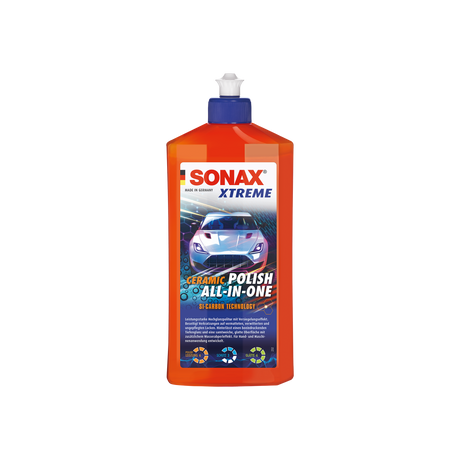
XTREME Ceramic Polish "All-in-One" Polish 500ml
Ceramic Polish All-in-One — Paint Correction with Ceramic Protection
SONAX
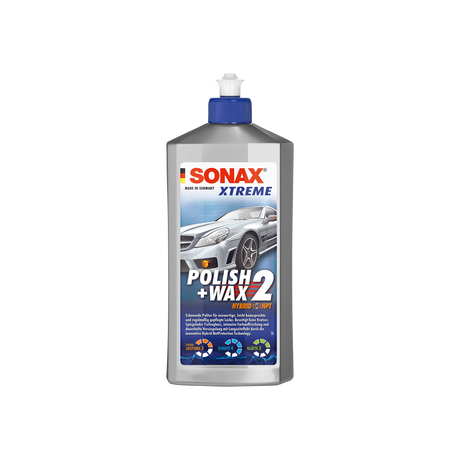
XTREME Polish+Wax 2 Car Polish 500ml
Polish+Wax 2 — Polish with Hybrid NetProtection Technology
SONAX
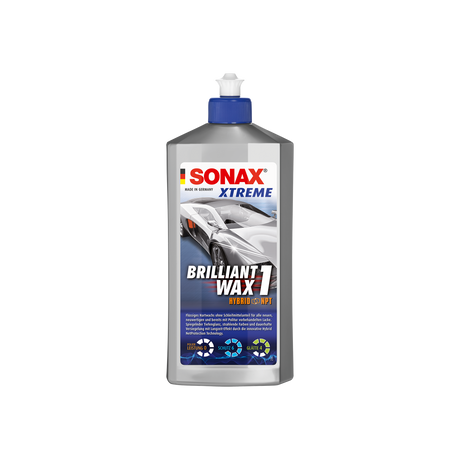
XTREME BrilliantWax 1 polish with wax sealant 500ml
BrilliantWax 1 — Conditioning Polish with Integrated Wax Sealant
SONAX
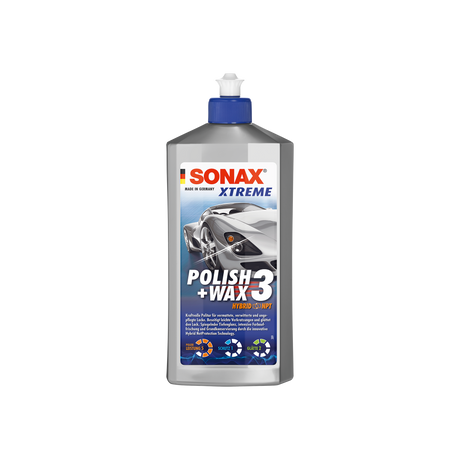
XTREME Polish+Wax 3 Polish 500ml
Polish+Wax 3 — Fine-grade polish with Hybrid NetProtection Technology
Which SONAX XTREME Polish suits your paint? The series scales polishing power and sealant in four levels — from abrasive-free wax care for new car paint to intensive repair polish for weathered surfaces. A system, not a guessing game.
Not every paint needs the same treatment — and that's precisely what makes the SONAX XTREME Polish series so sensible. Instead of a single all-rounder, SONAX offers four coordinated products, graded according to paint condition: from pure gloss refresh with wax protection to aggressive correction polish for paints that have been exposed to the elements for years without care. The principle is simple — you assess your paint and choose the appropriate level, instead of working your way through dozens of individual products from various brands.
Practical tip from Detailing1: The most common mistake when choosing a polish is to go by feel instead of paint condition. A too aggressive polish on new paint unnecessarily removes clear coat, while a too mild one on weathered paint yields no visible results. Rule of thumb: Run your fingernail across an inconspicuous area — if you feel nothing, BrilliantWax 1 is sufficient. If you feel fine grooves, use Polish+Wax 2. If the surface feels rough or looks dull in backlight, Polish+Wax 3 is the right choice.
SONAX has graded the XTREME polishes not by price or container size, but by polishing effect and protection concept. Each level solves a different problem — and this clarity is the biggest advantage over series where you first have to research what is intended for what.
BrilliantWax 1 works without significant abrasive particles. It is essentially a wax sealant with minimal gloss correction — intended for paints that already look good and only need to be refreshed. Hybrid NetProtection Technology forms a wax layer that lasts up to four months and produces a distinct water beading effect. Those who want to regularly protect a new car or freshly reconditioned paint will find the right product here.
Polish+Wax 2 is the best-selling all-rounder in the series — and for good reason. The moderate abrasive content removes light wash scratches, water spots, and initial signs of weathering without excessively stressing the clear coat. At the same time, the integrated wax sealant applies a protective layer that shields the paint from UV radiation, bird droppings, and industrial dust for three to four months. For the majority of all vehicles in normal use — whether garaged or regularly washed — Polish+Wax 2 is the right choice.
Polish+Wax 3 is significantly more aggressive. The higher abrasive concentration is designed for visibly weathered paints: dull areas, deeper scratches, color haze due to years of UV exposure. The polish controllably removes the damaged clear coat layer and smooths the surface, allowing the underlying paint to reflect again. The wax sealant completes the process and provides basic paint protection for the next few months. Polish+Wax 3 is the rescue for vehicles that have been neglected for a long time.
Ceramic Polish All-in-One takes a different approach: Instead of a wax sealant, it uses a ceramic component that anchors itself to the paint surface during polishing. The removal level is between BrilliantWax 1 and Polish+Wax 2 — light scratches disappear, but the main performance is the ceramic sealant, which lasts up to six months. Those who want to refresh their paint in one step and protect it long-term, without working with separate coating products, are well-advised here.
This grading means in practice: You don't reach for the "strongest" polish, but for the "right" one. This protects your clear coat long-term — because every polish removes material, and those who regularly use the most aggressive level dilute the clear coat layer faster than necessary. Conversely, a too mild polish on weathered paint only brings cosmetic improvements that disappear after the first wash. The system takes this decision off your hands because the four levels are clearly differentiated.
One point that is often overlooked: All four variants are based on diminishing abrasive particles. The abrasive grains break down into increasingly finer particles during processing, automatically creating an ever finer finish the longer you polish. This makes the products relatively forgiving — even if you polish a few seconds longer than necessary, you won't leave abrasive marks because the particles have already broken down. In contrast, some professional polishes use non-diminishing abrasives (SMAT technology), where the grain size remains constant — this allows for more precise control but also requires more experience, as over-polishing becomes a real risk. For the XTREME target group — vehicle owners and ambitious hobby detailers — diminishing technology is the safer choice because it keeps the result consistent even with less practice.
The result of a polish depends at least as much on preparation and technique as it does on the product itself. Those who follow the basic rules will get a clean result with any XTREME variant.
Pre-wash is mandatory. Every speck of dust on the paint surface becomes an abrasive during polishing — and an uncontrolled one at that. Therefore: wash the vehicle thoroughly, ideally with an XTREME Shampoo using the two-bucket method, then dry completely. Those who work particularly thoroughly can use a pre-cleaner such as snow foam beforehand to loosen adhering dirt without contact.
Apply product sparingly. A hazelnut-sized dab per panel (door, fender, hood) is sufficient. Too much polish makes the surface slippery — the pad loses grip and the abrasive particles work less effectively. Better to apply two thin coats than one thick one.
Machine polishing: An orbital polisher will give you the most even results. For BrilliantWax 1 and Ceramic Polish, a soft finishing pad at 800–1,200 rpm is recommended. For Polish+Wax 2, a medium pad at 1,000–1,500 rpm. For Polish+Wax 3, a cutting pad at 1,200–1,800 rpm — start slowly here and only increase the speed if necessary to avoid holograms.
Hand polishing: Apply polish with a foam applicator in circular motions, work in for 30–60 seconds per area, then buff off with a clean microfiber cloth. By hand, a whole vehicle takes about three to four hours — but you have full control and no risk of holograms. Hand application is particularly suitable for details: door edges, bumper transitions, areas around emblems and trim, which are difficult to reach with a polishing machine. Many experienced detailers therefore work in a hybrid way — large areas with the machine, edges and details by hand.
After-treatment: The sealant layer needs time to cure. After polishing, do not wash the vehicle for at least four to six hours and, if possible, do not leave it in the rain. Afterwards, an XTREME Quick Detailer maintains the surface between washes and significantly extends the durability of the sealant.
Avoid typical mistakes: Too much speed with an aggressive pad is the most common beginner's mistake in machine polishing — the result is holograms, fine wavy structures in the clear coat that appear as disturbing light reflections in sunlight. Therefore, always start at low speed and only increase if the abrasion is insufficient. Equally important: Always work with overlapping passes — each stroke should overlap the previous one by about a third, so that no untreated streaks appear. The same principle applies by hand: Consistent pressure and systematic work from panel to panel yields better results than arbitrary wiping over the entire surface.
Observe temperature: Polish adheres best to paint surfaces between 15 and 25 °C. Direct sunlight dries the product too quickly before the abrasive particles can do their job — this results in streaks and an uneven finish. In mid-summer, it is best to work early in the morning, late in the evening, or in a garage. At temperatures below 10 °C, workability also noticeably suffers: the polish becomes more viscous and is harder to distribute evenly. A simple test — place your flat hand on the sheet metal. If the surface feels warmer than your skin, it is too hot. If it feels cold, it's better to wait until the vehicle has warmed up to ambient temperature. Those who work in a heated garage don't have these problems — but the majority of hobby detailers work outdoors, which is why choosing the right time window is just as important as choosing the right polish.
The decision is easier if you honestly assess your paint condition. Here are the four typical scenarios:
New car or freshly reconditioned paint: The paint shines, shows no visible scratches, and still beads water well. No correction is needed here — BrilliantWax 1 refreshes the gloss and applies a protective wax layer. Alternatively, the Ceramic Polish All-in-One if you prefer longer protection from ceramic.
Everyday paint with light signs of wear: Fine wash scratches, minimal water spots, slight loss of gloss — this applies to the majority of all well-maintained vehicles after one to two years. Polish+Wax 2 corrects these marks and reseals the paint. This is the classic that fits most cases.
Neglected or heavily used paint: Visible scratches, dull areas, color haze, rough surface in the fingernail test. Here, the higher abrasion of Polish+Wax 3 is needed to smooth the damaged clear coat layer and make the paint reflect again.
You want everything in one step — polish and ceramic seal: The Ceramic Polish All-in-One polishes out light to medium defects and simultaneously leaves a ceramic sealant. Ideal if you are looking for maximum efficiency and your paint doesn't require heavy correction work.
Special case metallic and pearlescent paints: With metallic paints, the clear coat is particularly thin — therefore, extra caution is advised when choosing the level. It's better to start one level milder and check the result before moving to the next higher one. On light metallic paints (silver, white metallic), holograms are more noticeable than on dark colors, which is why a finishing pad in combination with Polish+Wax 2 often yields a better result than the combination with a cutting pad.
Combination for tough cases: If Polish+Wax 3 alone is not enough — for example, for paints with deep scratches or heavy oxidation marks — you can work in two passes: First Polish+Wax 3 with a cutting pad for the main abrasion, then Polish+Wax 2 with a finishing pad to smooth the surface and build up the sealant evenly. This two-stage approach combines the abrasive power of 3 with the clean finish of 2.
When in doubt: Start with the milder variant. It is easier to re-polish if necessary than to undo over-polished paint. Those who maintain several vehicles will find Polish+Wax 2 and Polish+Wax 3 as a combination to be the most flexible.
SONAX offers a second polish line, the PROFILINE series, which is consistently designed for machine processing and professional use. The difference is not the quality, but the target group and the application principle.
XTREME is aimed at vehicle owners and ambitious hobby detailers who are looking for a product that polishes and seals — job done. Every XTREME polish already contains a protective component (wax or ceramic). Application is straightforward, also possible by hand, and the system explains itself through the four levels.
PROFILINE rigorously separates polishing and sealing. Products such as CutMax, PerfectFinish, or EX are pure abrasive polishes without a protective component — a separate sealant must always follow. This makes sense for professional detailers who work with different machine setups, test various pad combinations, and need maximum control over abrasion and finish. CutMax, for example, has significantly higher abrasion than Polish+Wax 3, but is also more demanding to handle and requires machine experience. PerfectFinish, on the other hand, is a pure high-gloss finishing polish that removes the last micro-scratches after an abrasive step — an intermediate step that the XTREME system has built in through the diminishing abrasives technology and does not need separately.
The honest assessment: For annual paint care on your own vehicle or for customers looking for a quick, reliable workflow, XTREME is the more efficient choice. Those performing heavy paint corrections — paint damage, deep scratches, hologram removal — will opt for PROFILINE, because the grading there is finer and the combination with professional polishing machines is optimized.
And the market comparison? Polish series from other manufacturers such as Menzerna, Koch Chemie, or Gyeon also typically rely on a graded system of abrasive, finishing, and one-step polishes. The crucial difference with XTREME is the integrated sealant: While with Menzerna or Koch Chemie you absolutely have to apply a separate sealant after polishing, you save this step with XTREME. This doesn't automatically make the series better — but for anyone who wants to do preparation and protection in one step, it is a real efficiency argument. Another advantage of the XTREME series is the low barrier to entry: The 1/2/3 system is understood in a few minutes even without prior knowledge, while professional polish series often work with abrasion steps, cut values, and finish levels that require familiarization. However, those who professionally recondition and want to let the customer choose between different sealing options (wax, spray wax, ceramic coating) need the separation and opt for pure abrasive polishes.
The integrated sealant of XTREME polishes lasts three to six months depending on the variant. This is not a deficiency, but physical reality — weather, car washes, and UV radiation degrade every protective layer. What you can influence is how quickly that happens.
Hand wash instead of car wash: Brush car washes are the biggest enemy of any sealant. The rotating textile strips create fine friction on the protective layer with each pass — not enough for visible scratches, but sufficient to successively wear down the wax or ceramic layer. A hand wash with the two-bucket method creates significantly less mechanical stress, because the wash mitt is guided specifically instead of rotating at high speed over the surface. Those who consistently hand wash their vehicle extend the durability of the sealant by several weeks to months.
Quick Detailer as intermediate care: If the water beading effect diminishes after a few weeks, you can refresh it with an XTREME Quick Detailer or the XTREME Spray Sealant without having to polish the paint again. This significantly extends the service life of the basic sealant.
Shade parkers win: UV radiation degrades wax sealants measurably faster than ceramic. Those who park their vehicle predominantly in a garage or in the shade extend the durability of all XTREME polishes by 30–50%. The Ceramic Polish benefits less from this, as ceramic is naturally more UV-resistant — another argument for the All-in-One for vehicles that are regularly parked outdoors. Tree sap, bird droppings, and insect residues also attack the sealant if they remain on the surface for a longer period. The faster you remove organic contaminants — ideally within a few days — the less the protective layer suffers.
When to re-polish? As long as the paint still visibly beads water, care without polish is sufficient. Only when the gloss permanently diminishes and care products can no longer refresh the effect, is it time for a new round of polishing — this is typically the case after 6 to 12 months.
The complete XTREME care workflow: Polish is just one component in the system. Before that comes washing with XTREME Shampoo, then care with Quick Detailers, and if necessary, re-sealing with XTREME Spray Sealant. Anyone who follows the complete workflow — wash, polish, care — will get more durability from their polish than someone who only polishes once a year and leaves their paintwork to fend for itself in between. The individual products of XTREME Paintwork Care are coordinated with each other and enhance each other's effectiveness.
Polish+Wax 2 is for slightly worn paintwork with fine wash scratches and minimal loss of shine — the classic for the majority of well-maintained vehicles. Polish+Wax 3 has a significantly higher abrasive content and is designed for heavily weathered, dull, or deeply scratched paintwork. When in doubt, start with 2 — re-polishing is easier than repairing over-polished paintwork.
Yes, all four XTREME polishes can be applied by hand with a foam applicator. Hand application takes longer — expect three to four hours for an entire vehicle — but delivers an equivalent result. For large areas, an eccentric polishing machine is more efficient; for details and hard-to-reach areas, hand application is even more precise.
The wax sealant of BrilliantWax 1, Polish+Wax 2, and Polish+Wax 3 typically lasts three to four months. The Ceramic Polish All-in-One achieves up to six months of durability thanks to its ceramic component. The actual durability depends on weather, parking location, and washing method — hand washing and shaded parking significantly extend the protective effect.
No, that's the advantage of the XTREME series: every polish already contains a protective component — either wax or ceramic. You polish and seal in one step. If you want to refresh the protective effect between polishing cycles, you can use an XTREME Quick Detailer or a spray sealant without having to polish again.
The XTREME series polishes and seals in one step — ideal for private users and regular vehicle care. PROFILINE consistently separates polishing and sealing and offers finer abrasion levels for serious paint correction with professional machines. For annual paint care on your own car, XTREME is more efficient; for professional detailing with maximum control, choose PROFILINE.
Too much choice in XTREME Polish — SONAX? Get help picking:
Add Detailing1 as a preferred source on Google
Daniel von Detailing1 |

Daniel von Detailing1 |

Daniel von Detailing1 |

Daniel von Detailing1 |

Daniel von Detailing1 |

Daniel von Detailing1 |

Daniel von Detailing1 |

Daniel von Detailing1 |

Daniel von Detailing1 |

Jasper von Detailing1 |

Daniel von Detailing1 |

Daniel von Detailing1 |