



Cleaning Alcantara without ruining the pile
The question we get asked most about interior care almost always sounds the same: is this safe for my Alcantara? There's a real fear behind it, because when you clean Alcantara one wrong move does more damage than any stain ever could. Reach for shaving foam, glass cleaner or a stiff sponge and you crush the fine pile flat, creating the exact greasy, shiny patches you were trying to get rid of.
Alcantara comes clean with a pH-neutral cleaner sprayed onto a soft brush and worked in with no pressure, in small circular motions. It isn't the product that decides the result, but how little moisture and how little force you use.
Alcantara is a microfibre suede, not a fabric and not leather
Alcantara is a synthetic microfibre suede made from extremely fine polyester and polyurethane fibres. It feels velvety, and that's exactly why it reacts so badly to pressure and moisture. It isn't a textile in the classic sense, and it isn't leather, even though in the car it's often fitted right next to both.
That lovely feel comes from millions of upright fibre tips that scatter the light softly. Those very tips are the problem: glue them together or press them down and the spot suddenly reflects flat and looks greasy. In a sports car the material sits exactly where hands land most, on the steering wheel, on the seat bolsters and on the centre console.
We see this day to day on our test cars outside the showroom in Nordhorn: the name Alcantara belongs to the Italian company Alcantara S.p.A., while identical materials from other makers go by microfibre suede or Dinamica. For cleaning it makes no difference, the fibre structure is the same and calls for the same care.
The important line to draw is downward: genuine velour and ordinary fabric seats are tougher and take more moisture. Mix the three materials up and you treat the most delicate one like the toughest, and when you clean Alcantara that almost always ends badly.
One last point to place it properly: Alcantara is built to be flame retardant and colourfast, but it isn't made for staying wet. Let moisture sit in the pile too long and the backing layer swells slightly, and as it dries the dirt migrates to the edge, where it stays visible as a water mark. That's exactly why drying time later isn't a side note but part of the method.
First work out what you're dealing with
Before you spray, you need to know whether you've got genuine Alcantara, a microfibre imitation or classic velour in front of you, because only then do you pick the right amount of moisture and the right brush. A minute spent checking the material saves you a ruined seat bolster later.
You'll spot Alcantara by its extremely fine, dense pile and a slight directional look: run a finger over it and the surface goes lighter or darker, much like suede. Genuine velour looks coarser and more voluminous, while pure fabric covers show a recognisable weave instead of a pile.
On the steering wheel it's almost always genuine Alcantara, often with a twelve o'clock marker. Here the dirt is typically not loose grime but ground-in skin oil that glues the pile together. This is the classic case of greasy Alcantara, and it calls for a different strategy than a fresh coffee stain on the seat.
On the seats it pays to look at where the materials meet: plenty of sports seats pair Alcantara centre panels with leather side bolsters. That border is tricky to clean, because leather and Alcantara need different products and different amounts of moisture, and the join can run together when it's wet.
When in doubt, test on a hidden spot, say the underside of the seat or the lower bolster. Put a small amount of cleaner there and blot it off, and once it dries you'll see straight away whether the material takes the moisture and whether the colour holds. That quick test costs two minutes and saves you visible damage on the very spot everyone sees.

Only pH-neutral cleaners spare the pile
Alcantara only takes pH-neutral cleaners around a value of seven, because acidic, alkaline or solvent-based products harden, discolour or permanently glue the fine microfibres. This is the single most important rule, and it explains why so many home remedies wreck the material.
Shaving foam, glass cleaner and all-purpose cleaner turn up in every other home-remedy guide, but they're exactly the wrong call. Glass cleaner often contains alcohol that dries the fibre out, all-purpose cleaners are usually alkaline, and shaving foam leaves surfactants behind that form an even greasier film once they dry. What looks clean for a moment is worse than before after two weeks.
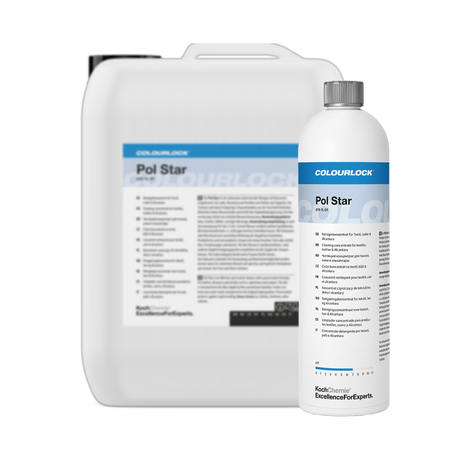
Specialist cleaners like the SONAX XTREME Upholstery and Alcantara Cleaner are tuned exactly to this class of material and come ready to use. If you look after larger areas or several cars, you're better off with a concentrate like the COLOURLOCK Pol Star, which you dilute around one to ten for upholstery.
Still, you have to stay honest: a pH-neutral cleaner reliably lifts skin oil and fresh stains, but even it won't pull deep, years-old grime out in one go. Some spots need two or three gentle passes, and a pile that's been sat flat for years can be lifted, but not always brought fully back to new.
The second reason for pH-neutral is the colour. Alcantara is dyed through, but over time alkaline cleaners attack the shade and leave dark material bleaching out along the edges that get the most use. A neutral cleaner works gently enough that you can repeat the clean regularly, without the steering wheel ending up lighter than the rest of the interior after one season.
How do you spot the right cleaner on the shelf? The reliable sign is an explicit material approval on the label, meaning it names Alcantara or microfibre suede, paired with the note pH-neutral or solvent-free. Blanket upholstery foams from the hardware store deliberately leave this material off the list, because they're meant for tough fabric seats. When in doubt: a cleaner that promises wheels, engine bay and upholstery all at once is almost always too aggressive for Alcantara, because a do-it-all product can never be powerful and fibre-friendly at the same time.
The method is what counts: spray the brush, work in circles, lift the pile
The right technique matters more than the priciest product: always spray the cleaner onto the brush rather than straight onto the Alcantara, then work with the dead weight of a soft brush in small circular motions, with no pressure at all. That way you avoid water marks and crushed fibres in one move.
Work in small sections about the size of your palm, not across the whole seat at once. A soft brush like the GYEON Q²M LeatherBrush lifts the dirt out of the pile without breaking the fibre tips. Stiff bristles or a hard sponge do exactly that, and that damage can't be undone.
Once you've worked it in, lift the loosened dirt off with a clean, short-pile microfibre cloth, blotting rather than rubbing. While the spot is still slightly damp, brush the pile back up in one direction with the dry brush; that brings the velvety look back. After that it's patience: let it dry for at least thirty minutes, and on more soaked seats better overnight.
On the steering wheel the order is the same, only the dose is smaller. Here it's almost always about skin oil, so go twice gently with little moisture rather than once wet. Get the steering wheel too wet and you risk marks right in your line of sight, and every passenger spots those straight away.
A practical note on drying: leave the windows open a crack, or clean on a day when the car won't be shut up in the sun straight afterwards. Trapped residual moisture plus warmth is the most common cause of a musty smell after an interior clean. With the changeable, on the damp side weather we've got right now, a dry garage or a carport beats the open yard.

Cleaners and brushes off our shelf for Alcantara
For Alcantara we deliberately stock only products that work pH-neutral and have proven themselves in practice, from the ready-to-use spray to the high-yield concentrate. Which one suits you depends on how much surface you look after regularly.
The SONAX XTREME Upholstery and Alcantara Cleaner is ready to use and propellant-free, ideal for the quick, spot clean of a steering wheel or seat bolster. The COLOURLOCK Pol Star, on the other hand, is a cleaner concentrate for fabric, leather and Alcantara, and a single litre lasts a very long time. The full hands-on take is in the piece on cleaning car seats with the Pol Star.
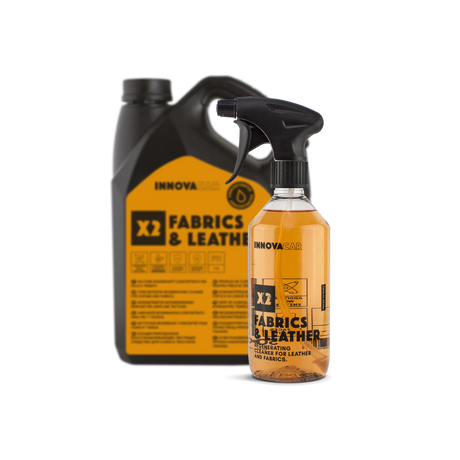
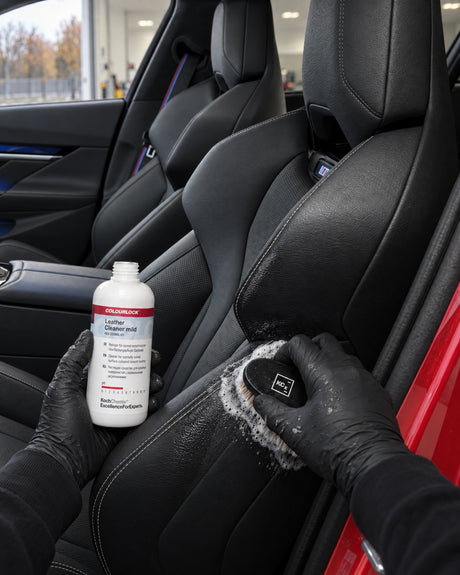
For mixed interiors with fabric and leather parts, the INNOVACAR X2 Fabrics and Leather is handy, because it covers both materials. Where genuine smooth leather sits next to the Alcantara, that's where a mild leather cleaner like the COLOURLOCK Leather Cleaner Mild belongs, not the Alcantara method. A soft brush and a few short-pile microfibre cloths belong in the kit either way.
If you want to protect the freshly cleaned pile, once it's fully dry you can lay down a textile sealant like the INNOVACAR SC4 Tex Coat. It makes liquid bead off, so the next coffee stain sits on top instead of soaking straight into the fibre.
A word on kit: you don't need a pro wet vacuum to get a steering wheel or a seat bolster under control. A cleaner, a soft brush and two clean microfibre cloths are plenty for regular care. A wet vacuum only earns its place once you want to extract whole seats or a carpet, and even then the brush method stays essential for delicate Alcantara. You'll walk the whole interior in the right order in the piece on cleaning the interior by order of steps, where the Alcantara step slots into the overall flow.
Fresh stain, greasy steering wheel or grey seat bolster
Which strategy you need depends on the damage in front of you: a fresh stain calls for quick blotting, a greasy steering wheel for several gentle passes, and a seat bolster gone grey for patience plus lifting the pile. One and the same product, but three different approaches.
If the stain is fresh, say spilled coffee, lift the liquid off first with a dry cloth, without rubbing, and only then follow up with a little pH-neutral cleaner. With a greasy steering wheel and ground-in skin oil you work in two or three thin passes, because a single wet pass only spreads the oil around instead of lifting it.
A seat bolster gone grey isn't a film of dirt but a crushed, matted pile. Here the dry brushing after the clean is the decisive step, not the product itself. Ink and dye transfer from dark jeans is the hardest case, and the most honest point too: it can often be reduced, but not always removed completely.
For everyday use that means: clean contact zones like the steering wheel and seat bolsters briefly every few weeks rather than in one big session once a year. Skin oil that hasn't yet glued deep into the pile comes off with minimal effort, and it's exactly this routine that stops the typical greasy spots forming in the first place.
If you take away just one thing, make it this: when you clean Alcantara, the one who does less almost always wins, less moisture, less pressure, less rush. Get that into your head and you'll keep the velvety feel for years, instead of losing it on the first cleaning attempt.

Jasper's hands-on tip: I'm almost fussy about Alcantara, because on one of our test cars I saw for myself how fast a well-meant cleaning attempt backfires. On an M steering wheel a greasy streak had built up on the nine o'clock side after one summer, classic skin oil. My first reflex back then was too much product and too much pressure, and sure enough it left a light ring. These days I do it the other way round: one spray onto the brush, work almost dry, and lift the pile back up at the end. Three short passes over two days beat any single wet attempt, and that's exactly the pace hardly anyone takes.
No time for the whole post? Get it summarized:
Add Detailing1 as a preferred source on Google