Caring for BMW leather starts with knowing whether it's Dakota, Vernasca or Merino
Daniel von Detailing1 |


Koch-Chemie
"Dosing Cap" dosing cap for 1000ml / 270mm bottles
Dosing cap with 5 ml scale for Koch-Chemie 1-liter bottles

Koch-Chemie
Outlet Tap for Koch-Chemie Canisters

SONAX
PROFILINE Dosing Cap Dosing Aid
Dosing cap — Precise dosing aid for cleaning concentrates
SONAX
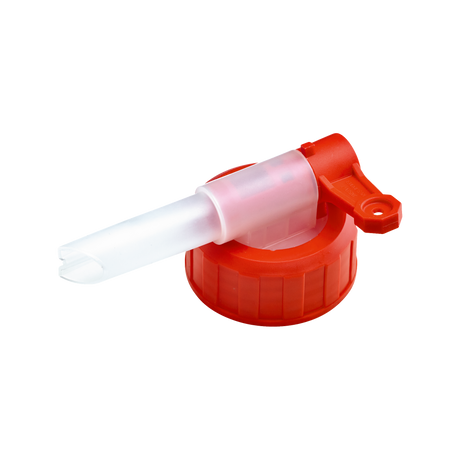
PROFILINE Plastic Drain Cock Dosing Aid
Plastic drain tap — Dosing aid for 3-L and 5-L canisters


CarPro
CarPro "Measure Cap" Dosing Cap for 1000ml / 500ml Bottles (28/400)
Precise dosing for a perfect blend of your car care products
Koch-Chemie
Measuring Cylinder with Volume Scale
Koch-Chemie
Graduated Jug with Volume Scale
Koch-Chemie
What are dosing aids in car care? Tools that get concentrate out of a bottle or canister and into a spray bottle, pump sprayer or bucket in a measured amount: canister opener, dispensing tap, dosing cap with dip tube, measuring cylinder and measuring jug. They make your cleaner's mixing ratio repeatable — they don't replace it.
Dosing aids in car care are the kit that sits between concentrate and working solution — not the dosing ball from the laundry aisle. They open the container, get cleaner or shampoo out of the canister and measure exactly the amount the manufacturer specifies for its mixing ratio. What that means for you: the tenth time you mix a spray bottle, it holds the same mix as the first, not a guess by eye.
Detailing1's tip from the shop: Never read a mixing ratio as a percentage. 1:10 means 1 part concentrate plus 10 parts water, 11 parts in total. For 1 litre of ready-to-use solution, that's about 91 ml concentrate and 909 ml water, not 100 and 900 ml. Koch-Chemie does the maths the same way in its own dilution guide: 1:5 is 10 ml of chemical to 50 ml of water. The cleaner decides what's right. The dosing aid just makes sure you hit it every time.
A dosing aid is the tool that gets concentrate from a bottle or canister into a bucket, spray bottle or pump sprayer in exactly the amount your cleaner's mixing ratio calls for. The concentrate arrives in a 1-litre bottle or a canister and gets diluted with water before use. The finished mix you spray on or pour into the bucket is called the working solution or in-use solution.
Without measuring, the mix tips one of two ways. Koch-Chemie states in its dilution guide that chemicals mixed too strong or at the wrong concentration can attack vehicle parts. Mix too weak, on the other hand, and you lose cleaning power, which you then make up for with more pressure on the towel or brush. You only notice either in the result, not when filling up.
A cleaner often has more than one mix. Koch-Chemie recommends in its dilution guide matching the dilution to how dirty things are; for Pol Star, the application sheet gives a range of 1:5 to 1:20 depending on soiling. Work like that and you mix two bottles from one concentrate: a stronger one for heavy dirt and a weaker one for routine maintenance. Only when measured do the two mixes stay properly separate — by eye, they blur into each other.
Dosing aids cover the route from bulk container to working bottle with four types of tool: canister opener, dispensing tap, dosing cap with dip tube and measuring vessel, each responsible for exactly one step of the chain. Which of them you need depends on the container your concentrate comes in.
The canister opener comes first and opens the caps on big containers without a struggle. Then the dispensing tap takes over — SONAX calls it a drain tap. It screws onto the canister opening in place of the cap, and you draw off the concentrate instead of lifting and tipping the full canister. SONAX and Koch-Chemie both name the same purpose: clean, safe and economical dispensing.
The dosing cap with dip tube works on the 1-litre bottle. It replaces the original cap, and a thin tube reaches down to the bottom of the bottle. Squeeze the bottle and concentrate rises into a measuring chamber, usually with a scale. Handy: you read the amount off the top of the cap, open the lid and pour, without picking up a second vessel.
The measuring vessel is the open option, as a measuring cylinder or measuring jug with scales of different fineness. It fits every bottle and every canister and costs you one extra step in return. Which cap goes on which bottle is covered in depth on Dosing caps, while taps and canister threads are sorted on Dispensing taps.
At the end of the chain is the vessel that gets the working solution onto the car, and that choice belongs under Spraying & foaming: hand bottle, pump sprayer or Foam Sprayer. A pump that draws concentrate straight out of the canister doesn't belong in this category. Here we measure, we don't pump.
A dosing aid has to fit three ways: the thread of the bottle or canister, the chemistry running through it, and the smallest amount you want to measure with it. If one of the three is off, it drips, won't hold or measures too coarsely.
Canister openings come in several standardised thread sizes, and they don't fit each other. Which size a canister has depends on the manufacturer, not the litres. SONAX builds its drain tap for its own 3- and 5-litre canisters. Koch-Chemie has its own taps for the 5-litre and for the 10- and 30-litre canisters, and according to dealer information the 5-litre tap has a different thread from the SONAX one.
That's exactly the question we get in chat: which dispensing tap fits my canister? The honest answer starts with the canister, not the tap. Check the brand and container size and look at the thread size of the canister opening before you order. The same goes for dosing caps — they're system accessories for one family of bottles and won't automatically sit on other brands' bottles.
The second axis is chemistry, and approvals vary widely here. According to its manufacturer, one dosing cap is only meant for alkaline products and shampoos, explicitly not for acids or solvents. Another is described by its manufacturer as resistant to acids, alkalis and solvents. So before an acidic wheel cleaner runs through a cap, check what the cap is approved for.
The third axis is quantity. The smaller the dose, the finer the scale you read it off has to be. High-strength concentrates in the range of a few millilitres need a fine measuring vessel or a cap with tight markings. A tap, on the other hand, delivers bigger portions — its stream is too coarse for a single millilitre.
To convert a mixing ratio into millilitres, divide the target volume by the total number of parts and multiply the result by the concentrate share. The first number is the concentrate, the second the water.
For a 500 ml spray bottle at 1:4, that's 500 divided by 5, so 100 ml concentrate and 400 ml water. A litre at 1:100 needs about 10 ml of concentrate — exactly the range a 5 ml scale is made for. So 1:5 means one sixth concentrate, not one fifth.
Not every manufacturer does the maths this way. For its dosing cap, SONAX gives 50 ml of cleaner for 1:20 in a 1-litre pump sprayer, so it's apparently calculating from the container volume; strictly by parts, it would be about 48 ml. Both readings make sense in their own right. What counts, then, is the method on the label or in the data sheet of the cleaner you're using. Shampoo dilutions for the bucket are under Car shampoo.
When mixing from a canister, a fixed order helps. Screw the tap on hand-tight and lay the canister so the tap sits at the bottom. Tighten it with a tool and the seal deforms and the thread drips. If the stream glugs, no air is getting in. Then check the canister's venting, because negative pressure can make a canister collapse inwards while you're decanting.
Water goes into the spray bottle first, then the measured concentrate. The other way round, cleaners and shampoos containing surfactants foam up as you top up, and the bottle overflows before the amount is right. In the bucket for a hand wash, foam is what you want, so that order doesn't apply there. Finally, label the bottle with product name, dilution and fill date, as described under Spray bottles. A drinks bottle is a no-go as a working bottle.
Our range of dosing aids covers every step of the chain, from the cap for the bottle to tap and canister key to measuring vessels with scales of varying fineness. What matters isn't the brand but the step you're measuring at.
The SONAX PROFILINE Dosing Cap comes in a six-pack and fits the SONAX 1-litre round bottle. Before filling, open the lid slightly so pressure can escape, then squeeze the chamber full. The dip tube reaches the bottom, so according to the product description it still works with the bottle tilted and at a low fill level. It's less suited to thick products like waxes, pastes or gels, and SONAX doesn't state a chamber volume.
The SONAX PROFILINE Plastic Drain Cock goes on the SONAX 3- and 5-litre canisters. It's the tool for when you regularly refill spray bottles or buckets from the canister. According to the product description, it's meant for portions between 50 and 500 ml and doses less precisely than a cap. So for the single dose of a high-strength concentrate, tap into a measuring vessel and measure there.
The Koch-Chemie Measuring Cylinder is a 500 ml measuring cylinder with a 5 ml scale, intended by Koch-Chemie for precise dosing of high-strength concentrates. The Koch-Chemie Graduated Jug is the matching measuring jug, with 2 litres and a 20 ml scale, for dosing and pre-diluting cleaning concentrates. In plain terms: the cylinder measures, the jug mixes.
The Koch-Chemie Canister Opener is the canister key in the chain, described by Koch-Chemie as a triple key for opening 5-, 10-, 30- and 200-litre containers without effort. The manufacturers don't state which plastic is used in taps, measuring vessels and openers or which chemicals they tolerate, so we don't state it either. What's documented is volume, scale and container sizes — pick by those.
Which dosing aid you need depends on how often you mix which concentrate and whether it comes from a bottle or a canister. The question of the best tool only comes after that.
The obvious objection: surely a measuring jug is enough? For occasional mixing, that's true. If you mix several concentrates now and then, one measuring vessel does the job well, because it fits every bottle and doesn't need a cap per product. The same vessel serves hand bottle, bucket and Pressure pump atomizer — you just rinse it between two concentrates. If the amount is a few millilitres, like the roughly 10 ml for 1:100 in a litre, reach for the measuring cylinder instead of the jug.
The cap pays off on a bottle you dose often and in small amounts, like the interior cleaner for your weekly round. Then you skip the detour via the measuring vessel every time you mix. Two limits come with it: the cap only fits its own bottle system, and not every cap is approved for acids or solvents.
If you buy in canisters, you need the full chain: opener, a tap with the right thread and a measuring vessel for the actual amount. For the measuring cylinder, Koch-Chemie also mentions pinning down exact wash-chemical consumption. For professional detailers and businesses that want to know usage and cost per vehicle, that's the hard number behind the costing.
The first time you mix from a canister, the maths and measuring take longer than you'd think. That's normal and gets quicker with every bottle. Write down the millilitre values of your regular mixes once — on a note by the shelf or straight on the canister — and you won't need to calculate next time. After that, dosing aids just take the measuring off your hands.
No dosing aid changes how much concentrate is right. That's decided by the manufacturer of your cleaner and how dirty things are. What the dosing aid does is something you only notice after months: the bottle you mix in March holds the same mix as the one from October. Only then are you comparing cleaners with each other, not two random mixes.
Too much choice in Dosing aids? Get help picking:
Add Detailing1 as a preferred source on GoogleA dosing aid is a tool used to transfer a measured amount of concentrate from a bottle or canister into a spray bottle, bucket, or pump sprayer. In car care, this includes dosing caps, dispensing taps, measuring cylinders, measuring jugs, and canister openers. You need them to ensure you hit the cleaner's mixing ratio accurately every time you prepare a solution, rather than guessing by eye.
Divide the target volume by the sum of the parts. 1:10 means 1 part concentrate plus 10 parts water, totaling 11 parts. For 1 liter of finished solution, this results in approximately 91 ml of concentrate and 909 ml of water, not 100 ml. If your cleaner's manufacturer uses a different method, such as referring to the container volume, follow their calculation method.
For occasional mixing, a measuring jug is sufficient because it works with any bottle, and for small amounts of high-concentrate, a measuring cylinder is better than a jug. A dosing cap is worthwhile for a bottle that you use frequently and in small quantities, as it measures directly at the cap. It only fits its specific bottle system; for example, the SONAX PROFILINE Dosing Cap fits the 1-liter SONAX round bottle.
This is determined by the thread size of the canister opening, which depends on the canister manufacturer, not the liter capacity. The SONAX dispensing tap is designed for 3- and 5-liter SONAX canisters, while Koch-Chemie offers its own taps for their canisters. Check the brand and thread before purchasing; you can find the classification on the Dispensing Taps page.
Put the water into the spray bottle first, then add the measured concentrate. Doing it the other way around causes surfactant-based cleaners and shampoos to foam up as you fill them, causing the bottle to overflow before you reach the correct amount. However, in a bucket for hand washing, foam is desired. After filling, label the bottle with the product name, dilution ratio, and filling date.
The measuring cylinder, because its scale is more finely graduated. The Koch-Chemie Measuring Cylinder holds 500 ml with 5-ml increments, while the Koch-Chemie Graduated Jug holds 2 liters with 20-ml increments. For a 1:100 ratio in one liter, which is about 10 ml, only the cylinder is suitable. The measuring jug is the vessel for larger batches and pre-diluting.
Daniel von Detailing1 |

Daniel von Detailing1 |

Daniel von Detailing1 |

Daniel von Detailing1 |

Daniel von Detailing1 |

Daniel von Detailing1 |

Daniel von Detailing1 |

Daniel von Detailing1 |

Daniel von Detailing1 |

Daniel von Detailing1 |

Daniel von Detailing1 |

Jasper von Detailing1 |