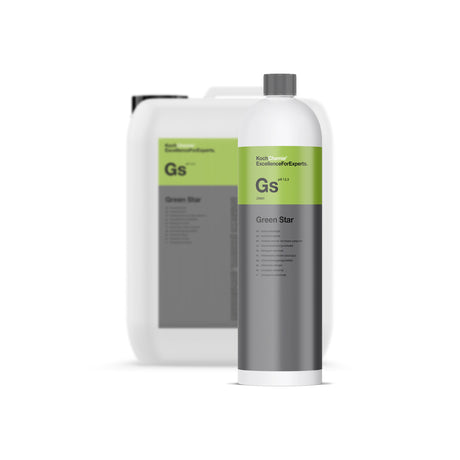
Cleaning an Alcantara steering wheel: grippy again, not greasy
Daniel von Detailing1 |


YETI
LoadOut® GoBox 60 Gear Case (large)
Ultimate storage solution for car care hardware


YETI
LoadOut® GoBox 30 2.0 Gear Case with Carry Strap
Robust and versatile equipment box for optimal organization


YETI
YETI LoadOut® GoBox 15 Gear Case (small)
Robust, versatile storage solution for adventure


YETI
YETI LoadOut® GoBox Divider — partition for the "LoadOut® GoBox"
Robust Divider for YETI LoadOut® GoBox


YETI
GoBox Caddy / insert for "LoadOut® GoBox"
Perfect organization for your car care equipment


YETI
LoadOut® GoBox 1 Gear Case (Mini)
Waterproof mini box for keys, phone and small parts
What are storage boxes for car care? Sealed hard-shell boxes with a lid, in which microfibre cloths, pads, polisher and closed bottles travel to the car sorted and dust-free. They don't keep things cool, they don't replace frost-free storage, and they're no place for wet cloths.
Storage boxes at Detailing1 are gear cases with a hard plastic shell, lid, seal and latches, built for carrying and storing your detailing kit in the car. We mean a transport box that keeps dust and splashes out and lives in the boot, not a household crate for the basement or the kids' room. In our range we carry the YETI LoadOut GoBox in four sizes, plus inserts to divide up the inside.
Detailing1's tip from the shop: One habit from what we see day-to-day that matters beyond the box: cloths only go in once they're completely dry, deep in the pile too. Also plan two separate zones, one for clean cloths and one for bottles and pads, so chemicals and cloths never touch.
A gear case is a hard-shell box with a lid and seal that gets cloths, pads, machine and closed bottles through the boot dry, dust-free and sorted.
The problem it solves only shows up on the paint. A microfibre cloth that has spent a week loose in the boot has picked up dust and fine sand from the carpet. The next time you wipe, exactly that dirt rubs over the clear coat. So the box doesn't prevent a mistake in the chemistry, it prevents the one before it: clean tools arriving dirty.
Searching for the term quickly takes you the wrong way. Type in storage box and you land at furniture stores, fabric baskets and toy-room crates. This is about something else: a box that shrugs off knocks in the boot, has a lid that seals tight and that you carry to the car by its handle or strap.
For chemicals there's a clear line. Bottles travel closed in their original containers; the box isn't a store for open containers and not a drip tray for solvents. If something does leak, the seal keeps it in the box instead of on the boot carpet. Wipe it out straight away and let it dry before any cloths go back in. The box belongs with the detailing aids around car care, not with the care products themselves.
Car care kit comes in three types of storage: the open stacking crate for a fixed storage spot, the soft bag for quick access and the sealed hard shell for transport, dust and splashes.
The open crate from the DIY store is light, cheap and quick to fill. It has no sealed lid, and that defines where it belongs: in the basement or on a shelf, where nothing flies around and no rain gets in. For bottles that stay at home anyway, you don't need more.
The detailing bag is the soft alternative. You reach in from the top, it moulds to the boot and weighs very little. On the other hand, it cushions knocks less than a hard shell and doesn't close as tightly as a lid with a seal. How boxes and bags compare in everyday use is covered in the overview on storage for detailing kit.
The hard shell with a seal is the pick for life on the road: the box stands in the boot, on the truck bed or next to the car on wet ground, and what's inside stays the way you packed it. Protective cases with foam inserts and tool system cases belong to the same class, but they're tailored to gauges or tools.
Let's clear up one mix-up right here. A gear case isn't a cool box; the GoBox has no insulation in its walls. If you want to keep drinks or food cold, look at the cool boxes, which are a separate product family with a different build.
When buying, the inside dimensions count for more than the outside ones, because the thick shell eats space, and what matters is whether your tallest bottle fits upright under the lid.
The upright bottle is the question boxes fail on. In a car care forum, users complained about DIY-store boxes where big bottles only fit lying down and the lids didn't close properly. So before you buy, measure your tallest bottle including the pump top and compare it with the inside height.
For the GoBox 1, the product description gives the inside dimensions: about 19 × 10 × 6 centimetres. For the larger models, the inside dimensions aren't in our product descriptions, and we don't copy figures from US retailer listings without checking them. If every centimetre counts, ask us before you order.
The box's own weight is part of the equation. According to the product description, even the smallest GoBox weighs 0.77 kilos, and the larger models bring correspondingly more empty weight. Once filled, a big box quickly becomes a load you'd rather carry by two handles or the shoulder strap than at arm's length.
Order inside comes from inserts: the divider for the main compartment and the caddy for small parts in their own compartments. The divider comes in versions for the GoBox 30 and the GoBox 60, and it isn't interchangeable between sizes. Which insert fits which box is explained on the accessories for storage boxes page.
Stacking is the second size question. According to the manufacturer, the GoBox 15, 30 and 60 are built with a pack-and-stack design, so several boxes can sit on top of each other. In the boot, the heaviest box goes at the bottom and the light one with the cloths on top. That way you reach for what you need on every job first and don't lift the full box out every time.
Washed and fully dried microfibre cloths stay dust-free in a closed box, while cloths packed damp start to smell and can go mouldy in the sealed interior.
Specialist retailers recommend storing clean cloths sealed and away from the chemicals. The reason is dust: it settles into the pile, and a cloth with dust trapped in it works on paint like fine sandpaper. So the box preserves what washing and drying have achieved. How to wash and dry your cloths is covered under microfibre cloths.
Wet cloths are the borderline case. If you wash at a customer's place or on the road, you end up with used, wet cloths, and the obvious place to put them is the box they came out of. Then the seal locks the moisture in. Used cloths go in their own bag or bucket until they're washed, and the box stays reserved for clean kit.
The box doesn't change the temperature in the boot. Koch-Chemie advises protecting care products from frost and excessive heat, and specialist retailers give roughly 10 to 25 °C as the storage range. Spray bottles can crack in frost, aerosol cans build up pressure in heat. In practice: in summer and winter the chemicals ride along for the job and then go back into frost-free storage indoors.
In the car, a full box is cargo. The ADAC (German automobile club) advises stowing heavy items low and snugly or securing them with straps and a net; in a crash test, a 145-kilo load at 45 km/h hit with a force of over seven tonnes. So put the big box at the bottom and right up against the rear seat backrest, not on top.
The box itself needs a bit of care too so the seal can do its job. Our care instructions for the GoBox 1 recommend wiping the box inside and out with mild soapy water, letting it dry open and keeping the lid seal free of sand. Only a clean seal closes reliably, and only then does the dust stay away from the cloths too.
Our range is made up of the YETI LoadOut GoBox in four sizes, and the right choice comes from the biggest item you want to take along, not from the amount of small stuff.
For gauges and small parts, the YETI LoadOut® GoBox 1 Gear Case does the job. A paint thickness gauge with spare batteries, car keys and phone fit inside, and the tray and lid compartment keep them apart. There's no pre-cut foam insert, so wrap the gauge in a microfibre cloth to stop it rattling on the road.
For hand tools, meaning brushes, pads, applicators and a few cloths, the YETI LoadOut® GoBox 15 Gear Case is a good fit, with a removable carry tray and stackable. If you take the full set of cloths plus several bottles, go up a size. One customer switched from the GoBox 15 to the GoBox 30 because the small one got too tight for his camera kit.
The YETI LoadOut® GoBox 30 2.0 Gear Case is the size for that full set of cloths with several spray bottles, and it has a shoulder strap for the walk from the car park to the car. For the YETI LoadOut® GoBox 60 Gear Case, our product description lists room for polishers, care products and other accessories, and tie-down slots let you secure it in the boot.
One question about these boxes that reaches us in the chat: how does the GoBox 60 differ from the GoBox 30? Our answer comes down to the machine. If a polisher comes along, it's usually the 60. If it's just cloths and bottles, the 30 is enough. The brand world with all the colours is under YETI LoadOut GoBox gear cases.
With the divider, it's worth double-checking the variant. One return we had came down to exactly that: the divider had been ordered for the wrong box size. So when you buy, pick the variant that matches your GoBox, and only add inserts once you know which items really travel upright in your kit.
If you store your detailing kit in a fixed, dry spot and rarely move it, an open crate will do; if you work mobile, you need the sealed hard shell.
If your bottles live in the basement and the car gets washed in front of the house, a simple plastic crate is all you need. It keeps things tidy, and that's all it has to do there. The money is better spent on a second set of cloths than on a box that never leaves the house.
If you drive to customers, work at the wash bay or your kit lives in the boot full-time, the maths changes. Then the sealed lid against dust and splashes counts, so does the hard shell against knocks and the option to stack and strap boxes down. Especially for detailers who load and unload every day, that's the difference between searching and working.
We'll stay honest about the limits. Reviews call the GoBox tough, but expensive and heavy. It has no foam insert for delicate gear, it doesn't insulate, and we haven't found any approval from YETI for contact with solvents. If you need a foam insert for gauges, go for a protective case; if you want to keep things cold, a cool box. And open solvents don't belong in a transport box anyway.
It ages gracefully, too. According to the product description, the GoBox plastic stands up to constant sun without yellowing, even on a truck bed. Scratches on the shell come with use. What really matters is the seal, because that's where the box earns its keep in detailing.
Where storage boxes prove their worth in detailing isn't toughness. It's cloth hygiene: a clean cloth only stays clean if it goes into a closed box dry and stays there until you use it. That makes the box the last step of your cloth wash, and your paint gets exactly the cloth you washed.
Too much choice in Storage boxes? Get help picking:
Add Detailing1 as a preferred source on GoogleFor car care, a hard-shell box with a lid and seal is suitable, provided its internal height accommodates your tallest bottle standing upright. It keeps cloths dust-free and bottles organized. For us, this is the YETI LoadOut GoBox in four sizes. For bottles that only sit in the basement anyway, an open crate is also sufficient.
The largest item is the deciding factor. For keys and measuring tools, the GoBox 1 with about one liter is sufficient. Brushes, detailing brushes, pads, and a few cloths fit into the GoBox 15; the GoBox 30 2.0 holds the complete set of cloths with several spray bottles. For a polishing machine, our product description lists the GoBox 60. You can ask us about the internal dimensions of the large models in advance.
No. The GoBox is a gear case without insulation in the walls. It protects its contents from dust, splashing water, and impacts, but does not keep anything cold. The coolers are built for drinks and food and are a separate product family. The GoBox also does not protect your care products from heat or frost in a parked car.
Not permanently. The box does not change the temperature in the trunk, and chemical manufacturers advise protecting care products from frost and excessive heat. Spray bottles can crack in freezing temperatures, and spray cans build up pressure in heat. For use, the chemicals can be transported in the box, but afterwards, they should be stored in a frost-free environment at about 10 to 25 degrees Celsius in the house.
The divider partitions the main compartment so that upright bottles do not slide around during transport. The caddy sorts small items into their own compartments. The divider is available in versions for the GoBox 30 and the GoBox 60, and it only fits its respective size. More information on compatibility can be found under Accessories for Storage Boxes.
Often, yes. If your bottles stay firmly in the basement and you wash your car in front of your house, a simple plastic crate is completely sufficient. The sealed hard shell is worth it if your equipment is regularly transported in the trunk, is exposed to dust and splash water, or needs to be stacked and strapped down. Reviews describe the GoBox as robust, but expensive and heavy.
Daniel von Detailing1 |

Daniel von Detailing1 |

Daniel von Detailing1 |

Daniel von Detailing1 |

Daniel von Detailing1 |

Daniel von Detailing1 |

Daniel von Detailing1 |

Daniel von Detailing1 |

Daniel von Detailing1 |

Daniel von Detailing1 |

Daniel von Detailing1 |

Daniel von Detailing1 |